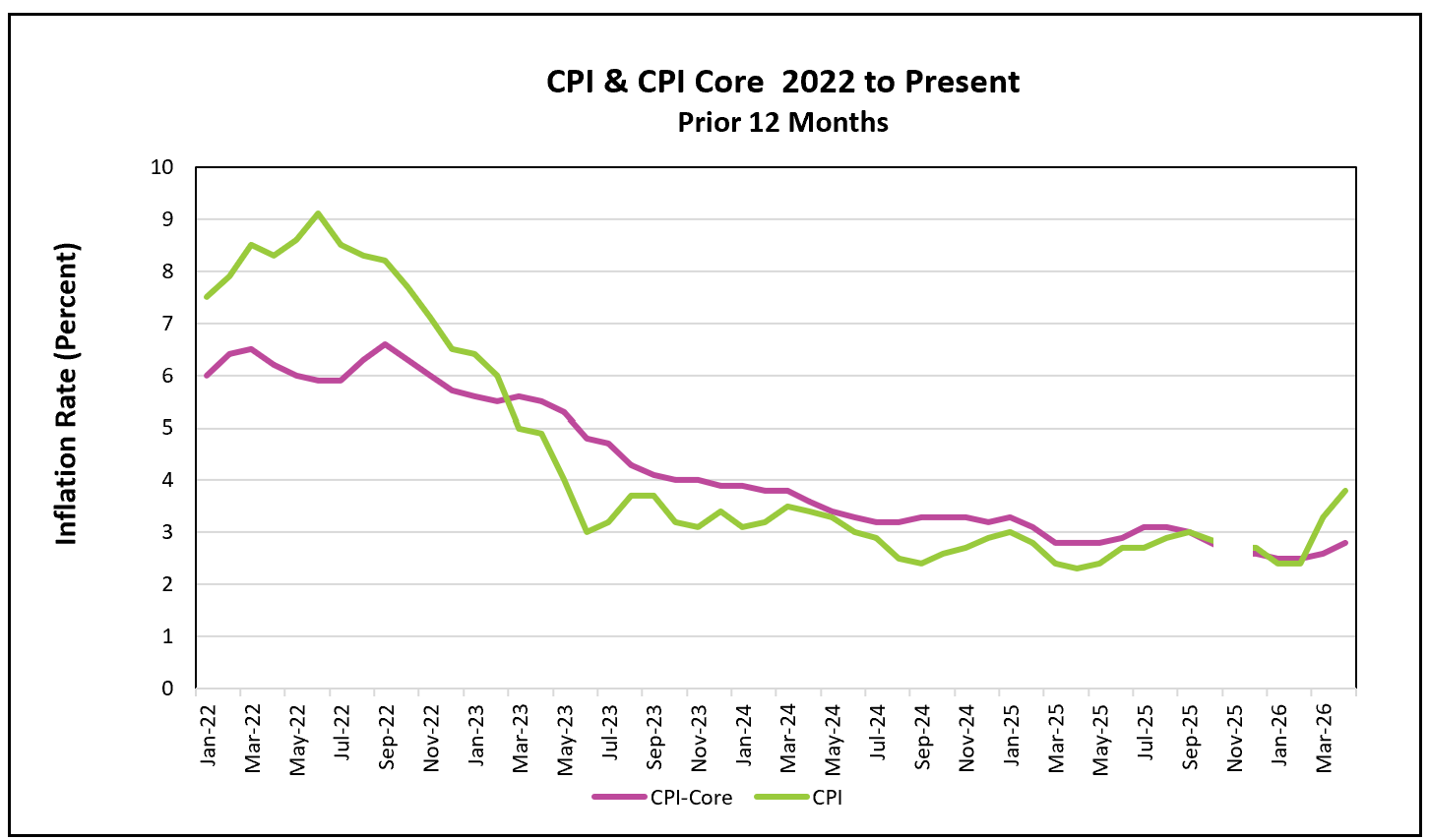
The inflation figures from the Bureau of Labor Statistics (BLS) Press Release: Consumer Price Index (CPI) – April 2026.
American households are feeling the financial impact of the war with Iran as rising prices continue to outpace income growth, placing increasing pressure on monthly budgets. April’s inflation report shows that while the monthly Consumer Price Index (CPI) moderated slightly from March, the broader inflation picture remains troubling. Higher energy costs, especially gasoline, are rippling through the economy and driving up the cost of nearly every good and service.
The CPI rose 3.8% from a year ago, the highest 12-month reading since May 2023. Energy prices were responsible for nearly 45% of that increase, underscoring the central role fuel costs are playing in today’s inflationary environment. Gasoline prices, which surged 21.2% in March, climbed another 5.6% in April. According to the American Automobile Association (AAA), the national average price for gasoline now stands at $4.515 per gallon, a dramatic jump from $2.98 when the conflict began.
Consumers are also being hit hard at the grocery store. Food-at-home prices rose 0.7% in April, the largest monthly increase in nearly four years. Essential staples such as meat, fruits, and vegetables each climbed more than 1.5%, pushing grocery prices 2.9% higher than a year ago. These increases reflect the widespread impact of higher fuel costs throughout the food supply chain, from fertilizer production and farm equipment operation to food processing and distribution.
Housing costs also continued to climb, with the shelter index rising 0.6%, its largest increase since the start of the year. Price pressures were widespread across other categories as well, including airfares, household furnishings, gasoline, and clothing. There were, however, a few areas of relief. New-vehicle prices declined 0.2%, while used-car prices were unchanged. Medical care, household appliances, and communication services also posted declines.
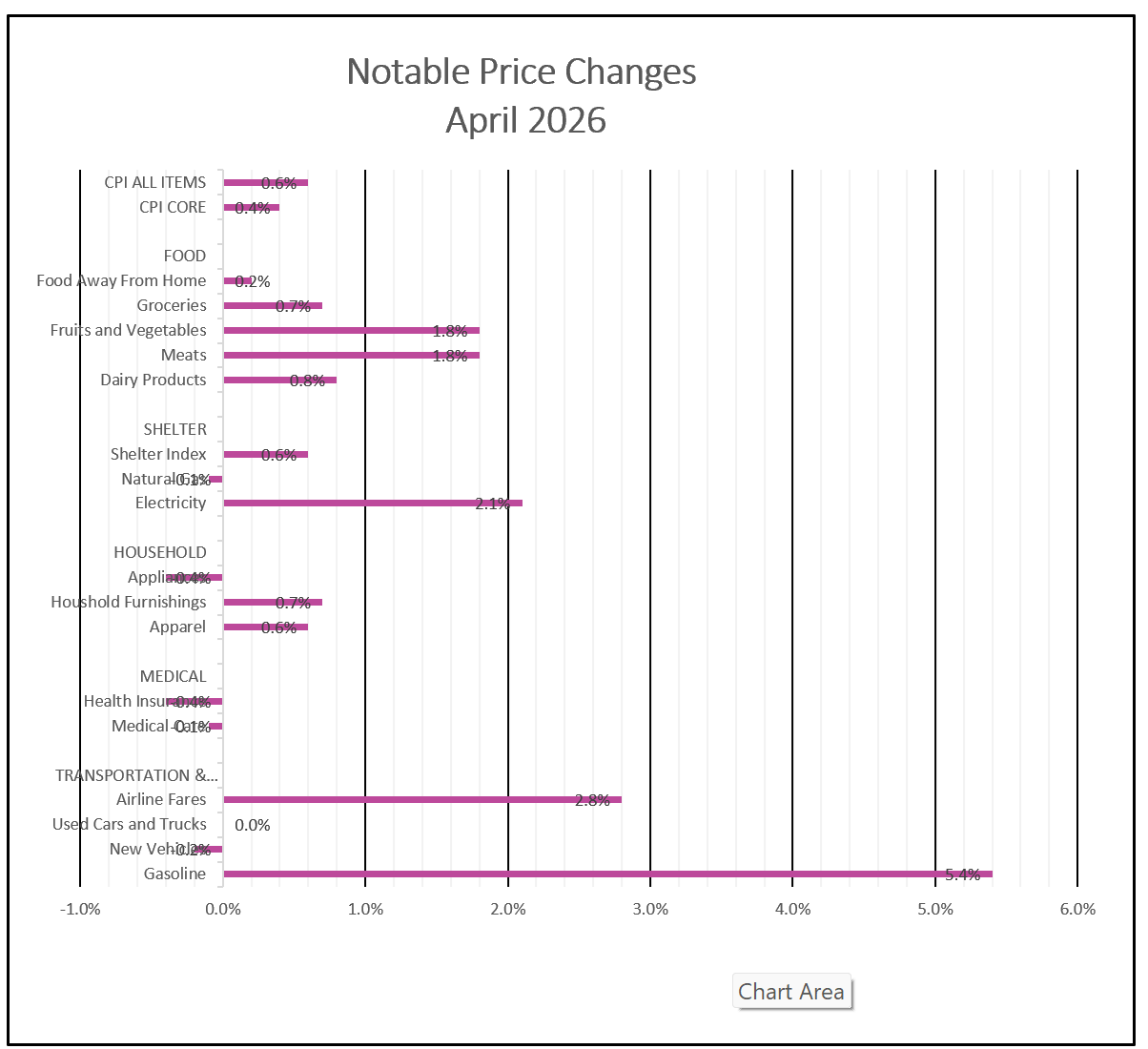
Although April’s all-inclusive CPI showed some deceleration, the details beneath the surface were far less encouraging. The core CPI, which excludes the more volatile food and energy categories and is closely watched by policymakers, accelerated sharply, doubling from the prior month. This increase suggests that elevated energy prices are beginning to filter through the broader economy, raising costs well beyond the gas pump.
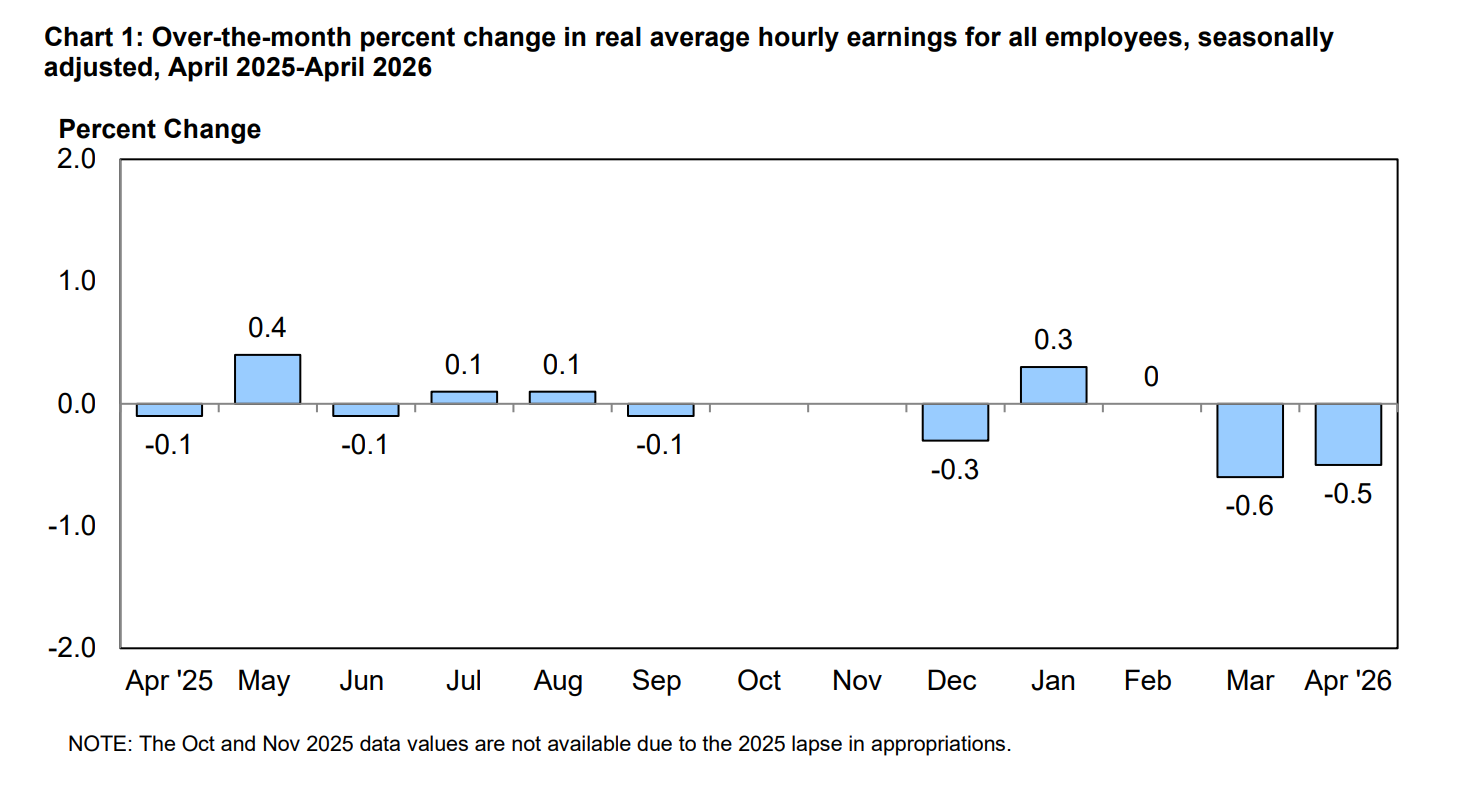
The growing inflation burden is now directly eroding household purchasing power. In April, wages fell 0.5% after adjusting for inflation, (BLS - Real Earnings April) while real wages were down 0.3% from a year earlier—the first annual decline since April 2023. When inflation rises faster than wages, families are forced to make difficult choices about where to cut spending. These reductions in discretionary purchases can weaken overall consumer demand, prompting businesses to delay investment or reduce hiring.
The challenge is made worse by households’ limited financial flexibility to absorb higher prices. The personal savings rate has fallen near historic lows, while debt payments are consuming a growing share of disposable income. Over time, this combination significantly weakens consumers’ ability to weather prolonged inflation.
For policymakers at the Federal Reserve, inflation has once again become the dominant concern. With inflation accelerating and the labor market remaining relatively stable, the central bank is likely to keep interest rates steady in the months ahead rather than risk stimulating further price increases.
The immediate outlook suggests little relief and greater inflation risks ahead as businesses gradually pass higher transportation and production costs on to consumers. Unless energy markets stabilize, households may face a prolonged period of declining purchasing power, slower economic growth, and increasingly difficult financial tradeoffs.
Focus will now shift to the upcoming Income and Outlays report from the Bureau of Economic Analysis, scheduled for release on April 30. The report will provide important insight into how rising inflation is influencing consumer spending patterns. Higher Rock will publish a detailed analysis following its release.